Posted in 21st Century parenting, 21st Century teaching, digital parenting, family conversations, parents and technology, privacy, understanding privacy

Privacy: I’ve Got Nothing to Hide So I’m Not Worried …

imageI often hear people of all ages, including children, say, “It doesn’t matter that my digital information is collected because I have nothing to hide.” What bothers me most about this comment is the limited understanding that it demonstrates — a lack of knowledge about how fast the traditional walls of privacy are tumbling down and how little of it has to do with the bad things that people do.

  • People who make the comment usually know little about what happens to collected digital data, most of it documenting everything we do in our daily digital lives and almost none of it destined to identify wrongdoings or help to find “bad guys.” So much data is now collected about each of us in so many different ways, that almost nothing about us cannot be found out.

Our phones document where we go, our cars move through intersections with mounted cameras that note our license plates, the grocery stores keep track of the foods we prefer, and our Internet searches document the things we want to do, what we want to purchase, and often our worries about how to solve certain problems. Our data even document our medical conditions (despite physicians and insurance companies complying obsessively with HIPPA privacy rules) as we go about checking on symptoms and prescription side effects, or merely try to learn more.

So I was pleased to discover a May 2013 article, Why Privacy Matters Even If You Have Nothing to Hide, by Daniel J. Solove, a professor of law at George Washington University. In easy-to-understand terms, Professor Solove addresses the myths associated with narrow interpretations of privacy issues.

Continue reading “Privacy: I’ve Got Nothing to Hide So I’m Not Worried …”

Posted in 21st Century parenting, acceptable use, American Academy of Pediatrics, digital devices and gadgets, digital kids, parent child conversations, parents and technology

9 Suggestions to Help Families Think About Digital Device Moderation

Designed using images from the Apple website.

I love my iPhone and iPad, and I cannot do many things without them. For children under 13, however, use time should be carefully monitored by each family. Kids today are playing independently with powerful devices, and they — the devices and the children — are not intended to interact in isolation and for long periods without adult supervision.

An article that provides food for thought, Your Phone Versus Your Heart, appeared in the March 23, 2013 New York Times. Also, check out the American Academy of Pediatrics media resources — the pediatricians are making recommendations because they know what they are talking about.

Just today I asked a group of device-savvy fifth graders, most around age 10, if they know anything about SnapChat, the app that deletes pictures in one to ten seconds (leaving plenty of time for a recipient with poor judgment to take a screenshot and save the photo). Just about every hand went up. During a lesson a few months ago I asked them how many of them know how to make a screenshot — and they can all do it in a lot less than ten seconds. Read my SnapChat review here.

A Few Social Media Supervision Suggestions            Continue reading “9 Suggestions to Help Families Think About Digital Device Moderation”

Posted in 21st Century Learning, communicating with grandparents, digital parenting, family conversations, grandparents, intention versus consequence, parents and technology, teaching digital kids

Whose Eyes Are Checking Out That Digital Content?

In his recent post over at the Changing Aging blog, Kavan Peterson describes a short video, Forwarders. Intended as a parody of people who continuously forward e-mail, the video reinforces stereotypes about elders and aging. It’s sad that this short film focuses solely on one older adult, especially since so many people of all ages are extreme (and irritating) forwarders.

generational tutorialsWhile it’s intended to be funny, the video’s other message is that old people with wrinkles are silly and inept — at least that’s my interpretation. I’ll bet that the video producer — I am guessing an adolescent or young adult — probably cherishes a fair number of lifelong relationships with grandparents. This parody promotes a stereotype that could have been alleviated simply by adding in a few younger characters who also need reforming. (I posit a guess about the creator/producer’s age after looking over other published web content.)

The video and others like it also raise a question. How do we help 21st Century learners who are natural Internet content “whizzes” to understand that everything uploaded is subject to interpretation?

As a teacher who concentrates on educational technology, I frequently hear the refrain, “But I did not mean to hurt that person,” usually after a student has created and uploaded what he or she considered to be amusing content. Sometimes it is, sometimes it isn’t, and sometimes various readers or viewers interpret the message differently. What my students slowly learn is that digital content may be funny to one person, not funny to another, and for some individuals downright insulting.

In today’s connected society digital natives — born into a world of computers, cell phones, and various other gadgets — find it easy to create content, but sometimes they forget that what they do and say (and upload) circulates far and wide. Different people will watch and may reach different conclusions about the work. One person’s joke can unintentionally malign others. Humor that is appropriate for a person at one age is not so funny when it’s uploaded into the world at large for everyone to see. Digital natives need to learn and respect the ways that different people view the world through slightly different lenses. Most professional writers of parody think long and hard about every detail of a project, interchanging those lenses as they create.

Continue reading “Whose Eyes Are Checking Out That Digital Content?”

Posted in 21st Century Learning, digital citizenship, digital learning, family conversations, parents and technology, privacy, teaching digital kids

Digital Footprints Video – Check it Out!

A well done and interesting presentation about digital footprints found at Harvard’s Berkman Center for Internet and Society website.

Good for middle school as well as older students. Parts of this video can be shared with fifth graders, but the whole video may a bit too scary for that age.

Parents, on the other hand, may consider this as an excellent resource for family conversations about digital life.

You might also enjoying reading my post, Digital Footprints, Changing What We Teach.

Posted in 21st Century Learning, family conversations, great sites for students, parents and technology

Learn Google Flu Trends and CDC – Winter 2013

Flu is here and for the next couple of months so many of us will need to take precautions to prevent, if possible, getting sick. Your family will probably have a few conversations about the flu, so here are some data-rich public health websites to use as a part of the conversation with 21st Century learners.

Some influenza seasons are worse than others, and this year appears to be more severe than the last few flu seasons. But no matter what year it is, it’s doubly important to help children and everyone else in your family avoid influenza exposure as much as possible — and no one should get very far into the fall months without receiving a vaccination at a physician’s office, pharmacy, or local clinic.

google-trends
Google Flu Trends Data Map

Today I went to Google Flu Trends to learn where in the United States influenza is hitting the hardest, and right now this dynamic mapping site indicates that the flu is just about everywhere. Google collects its data by keeping track of internet searches for symptoms such as fever, headache, or sore muscles. The collected search statistics turn out to be good predictors of what parts of the country are experiencing influenza-like illnesses.

Right now, January 18, 2013, the Google flu map shows that the flu is widespread — almost every state in the U.S. is the same bright red color, indicating that lots of people are sick with the flu and searching to learn more. A user can click in each state to look at the influenza-related searches from there. Click on the map to visit Google Flu Trends to see what it looks like.

CDC influenza
CDC Data Map

The data depicted by Google Flu Trends often corresponds to, but is not a substitute for, the hard data that the Centers for Disease Control and Prevention (CDC) receives when epidemiologists from around the country collect and submit data about actual diagnosed influenza cases in their states. In tracing the course of an epidemic, epidemiologists and health officials need to collect the specifics about place and time of an illness as well as general characteristics of the people who are sick (age, gender, ethnicity, seriousness of illness, pre-existing health conditions, etc.).

At this time, Google Flu Trends, while predictive of case counts, does not provide public health officials enough detailed information. Look at the CDC Influenza Summary Update.

Resources on Influenza Continue reading “Learn Google Flu Trends and CDC – Winter 2013”

Posted in digital parenting, family conversations, media literacy, parent child conversations, parents and technology, web research

Before and After the Super Storm: Resources for Parents

Click to access the tips (in PDF form).

If ever there is a time to keep our media literacy skills front and center, it’s after a national disaster. Adults need to regulate and monitor what children see and, more importantly, adults need to remember that children see and hear a lot more than we sometimes think.

Check out the blog posting Protecting Children From the Media’s Storm Coverage. Written by K.J. Dell’Antonia, the New York Times Motherlode blogger, the November 2, 2012 article focuses on the need to limit children’s exposure to storm-related media coverage.
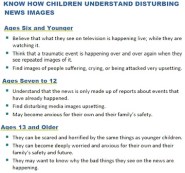
The Motherlode article directs readers to a two-page document that offers even more information about protecting children from prolonged traumatic event coverage — a free PDF available from the New York City Department of Health and Mental Hygiene website. The two-page article, Protecting Children from Disturbing Media Reports During Traumatic Events, offers tips for parents and caregivers, going into detail about what children understand at each age level.        Continue reading “Before and After the Super Storm: Resources for Parents”

Posted in 21st Century Learning, digital citizenship, digital parenting, online safety, parent child conversations, parents and technology, teaching digital kids

Seeking a Family Digital Use Agreement or Contract?

Check out the GetNetWise family digital use agreements.

Many times each year parents and teachers ask me for examples of agreements and contracts that can help families focus on digital life expectations and limits-setting. Some individuals seek a pre-written document to use with their children, while others hope to design and write a document expressly for their families.

These agreements, contracts, or pledges, cover the gamut of 21st Century digital world behavior, from cell phones, to online access, to texting, web 2.0, social media, cyber-bullying, and digital citizenship.

The conversation and preparation that contribute to developing a family agreement or contract are often more important than the final document. In these family discussions, parents will need to arm themselves with information about digital natives, address values, and encourage common sense. Parents will also need to help their children think about what to do in unexpected situations, and encourage them to speculate on how to cope with friends who encourage them to misbehave. The more personal and relevant the agreement, the better.

Then, too, adults should understand that the preparation and writing process is not a one-way street. A child may make a pointed observation or come up with a thoughtful idea about the digital issues contained in the agreement. Perhaps he or she feels strongly about certain types of access, time limits, or other parental expectation.  Maybe there are compelling reasons to grant access to one site or another, even though the parent has reservations.

Continue reading “Seeking a Family Digital Use Agreement or Contract?”