Posted in digital footprints, digital parenting, Do Not Track Kids Act, online security, online tracking, privacy

Stop Tracking Kids: Protect Their Privacy on the Web

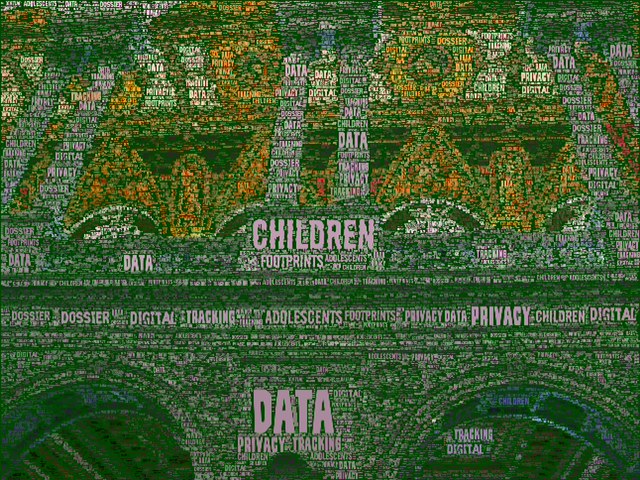
Image made with WordFoto with a picture taken at the Library of Congress.

While people worry a lot about kids and their digital access, the most critical aspect to me — and the most likely to cause an eventual problem for a child — is the degree to which information can be tracked and collected while children work and play in the web.

It doesn’t have to be this way.

For more information, read Tell the FTC to Stand Up for Children’s Privacy at the Campaign for a Commercial-Free Childhood website.

Posted in digital parenting, kids changing lives, parent education, parents and technology, wireless gadgets

Comparing Tech Skills: Pre-Schoolers vs. Adults

I recently discovered an interesting comment on a Linked In discussion, part of the ed-tech topics that I often follow.

The conversation asked the question, “Are tablets and iPads the new textbooks?” and the discussion was about an Educause article, E-Books in Higher Education: Are We There Yet? Educause is a non-profit sector organization that aims to help individuals “who lead, manage, and use information technology to shape strategic IT decisions at every level within higher education.”

In the Linked In conversation, Randy Tanner (Linked In profile) described the research of a colleague who is a doctoral candidate at Capella University whose dissertation research investigates the influence of iPads, tablets, and smart phones on pre-schoolers. According to Tanner:

One amazing fact she shared is that the typical 4-year-old is technically more competent with tablets and smart phones than the average adult. Think of the impact to primary school methodology. This isn’t the tech-savvy Millennial Y-generation; this the post-Millennial Z-Gen who may never touch a desktop PC and categorize laptops with 8-track players.

Continue reading “Comparing Tech Skills: Pre-Schoolers vs. Adults”

Posted in apps, cell phones, digital devices and gadgets, digital parenting, mobile phones, parents and technology, social media, social networking, tweens and technology

Getting to Know Instagram – Links to Bring Adults Up to Speed

In a matter of weeks last spring quite a few older elementary and middle school children whom I know jumped on the Instagram bandwagon, and they continue to have fun with it. The social networking photography app, now owned by Facebook, lives on their wireless devices, making it easy to use without getting encumbered with computers.

The minimum age for the Instagram app is 13, but that hasn’t stopped the site from attracting many children younger than that. While I tend to be someone who takes age requirements seriously, many parents, after checking out various sites, are more comfortable than I am with letting their children use sites when they are a bit younger than 13 years of age.

The biggest challenge for adults is keeping an eye on the content and quality of the photos that their children are uploading to Instagram. Problems can occur when children err in judgment as they make decisions about what to share (and what not to share).

In any event, all of us — parents, teachers, and any other adults in children’s lives — need to learn more about Instagram. I’ve added the app to my phone and plan to get acquainted with it. The list of articles below offers parents and teachers lots of information  — how Instagram works and how children socialize when they use the social networking app with their friends.         Continue reading “Getting to Know Instagram – Links to Bring Adults Up to Speed”

Posted in 21st Century Learning, digital citizenship, digital devices and gadgets, digital parenting, leadership, research on the web

Back-to-School Research Tips: Use Curated Online Databases

September brings the start of a new school year, and once classes begin, it’s not long before the first research reports and projects are assigned. To get started, your child will head right to his or her computer; however, adult assistance at home ensures that a student uses quality sources, as well as develop stronger 21st Century research skills.

Just about any time digital kids search for information at home, they fire up Google. While their teachers use substantial classroom time and energy introducing students to the best online research resources, children often need assistance, not to mention frequent reminders about applying these research lessons on their home computers.

As often as possible adults should remind children that results from Google — as wonderful as Google searching is — provide a huge number of links, many of them of questionable quality. A better way to search for information is to access library online resources and databases — the crown jewels of student research (Links at the bottom of this post will take readers to a few libraries that describe their virtual databases.) Searching in these databases decreases quantity and dramatically increases quality — which, in turn, improves the caliber of a student’s assignment. A web page chart at Illinois Institute of Technology compares  Google searches and database inquiries. A library tutorial from Western Oregon University also compares research on Google and online databases.                       Continue reading “Back-to-School Research Tips: Use Curated Online Databases”

Posted in 21st Century Learning, cultural changes, digital learning, digital parenting, parent education, parents and technology, teaching digital kids

Beloit College 2016 Mindset List: How Fast Life Changes

The new Beloit College 2016 Mindset List — a great start-of-the-school-year conversation piece for adults — is out.

Watch a video about the list.

At the beginning of each academic year, several faculty members at Beloit compile a list to demonstrate how students in the entering freshman college class experience life, learning, and culture differently from many of the adults they know. Some items are silly, others compare digital kids with their parents’ generation; some I don’t understand; and others I can fit into a bit of context, but they are mostly unfamiliar to me.

The list’s mission is to remind educators and parents that it takes energy and openness to new literacies to understand how dramatically the “growing-up” and learning processes change over time (and many of these have nothing to do with digital life). 

Every fall I look forward to the release of this list, which Beloit releases just before the start of the school year. I’ve included a few of my favorites from this year.          Continue reading “Beloit College 2016 Mindset List: How Fast Life Changes”

Posted in 21st Century Learning, family conversations, leadership, parent child conversations, parents and technology, reading

Reading Promotes Leadership Skills — Even in a Digital World

As parents, children, and teachers prepare for the start of a new academic year, many may enjoy reading the Harvard Business Review blog (HBR Blog) post For Those Who Want to Lead, Read. Parents of digital kids may want to take the time to share this short, thoughtful. and well-written article with family members as a back-to-school activity.

In today’s digital world, many people — including individuals who consider themselves literate — are not reading books as often or as deeply as in the past. In this HBR Blog post, John Coleman notes that reading digital chunks of content is far more common today. He provides inspiring examples of leaders who are well-read and describes in detail how reading benefits individuals who aspire to lead. Plenty of links take readers back to the sources of information that are mentioned in the article.

Best Quotes (Choosing only two was really difficult.)

  • Even as global literacy rates are high (84%), people are reading less and less deeply.
  • … Deep, broad reading habits are often a defining characteristic of our greatest leaders and can catalyze insight, innovation, empathy, and personal effectiveness.

For Those Who Want to Lead, Read concludes with recommendations that can support people who want to read more. After you peruse these suggestions, take a few minutes to think about how you might encourage the people in your family (or your students) to develop and maintain a deeper and more literary reading life?

You can also check out the post, How to Raise a Lifelong Reader at the Common Sense Media website.

Posted in 21st Century Learning, digital citizenship, digital learning, evaluating web site resources, parents and technology

New Google Lessons: Understanding YouTube and Digital Citizenship

Visit the Google lessons site.

Check out the Google interactive lessons, videos, and slides, all focused on digital citizenship, privacy, and YouTube best practices. Useful for teachers as well as parents, these discrete units are easy to use and share, especially when students need an organizational framework before beginning to look for school project resources. Each lesson is readily downloadable as a Google Doc and even for other presentation media such as PowerPoint.

Many of the Google videos include tips that can help students use YouTube more effectively while honoring copyright principles and evaluating content carefully. Google developed these digital resources for secondary students, but in many schools, the videos will also be valuable for middle schoolers. Even fifth grade teachers may find that some of the videos can help them in the context of curriculum units.

A conundrum exists, of course…          Continue reading “New Google Lessons: Understanding YouTube and Digital Citizenship”