Posted in 21st Century life, digital learning, digital life, sharing media, social media

Getting to Know Pinterest: A Parent’s Guide

Pinterest digitizes image collecting, the non-digital activity that lots of us have been doing for years. In a sense Pinterest offers a 21st Century way to bookmark and collect images instead of accumulating pieces of paper. I’m loving it!

Visit Pinterest.

Many people spend time looking through magazines and catalogs, identifying images such as the best-looking clothes, interesting plants, comfortable shoes, or pictures with ideas for an upcoming home construction project. An individual cuts out (or tears out) the image and puts it into a folder. I used to have folders (and more folders) filled with images on all sorts of topics, waiting for me to consult. And I used them from time-to-time, especially at the beginning of a project.

Continue reading “Getting to Know Pinterest: A Parent’s Guide”

Posted in 21st Century life, 21st Century parenting, online security, parents and technology, privacy

So I Just Won’t Use the Cloud! Really?

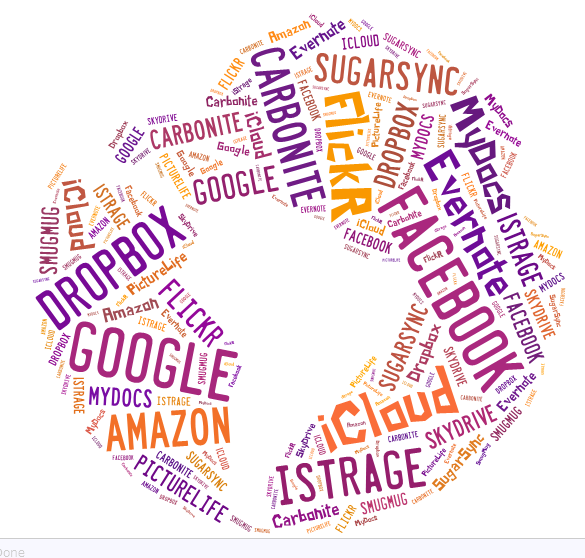
cloud storage
Just a few of the sites where people I know store data and photos.

Over the past several days I’ve heard more people say that they will stop using the cloud — a reaction to the stolen pictures, possibly taken from iCloud, of movie stars and celebrities (September 2014).

Hmmm…  How about being a bit more realistic?

This is a great teaching moment for 21st Century parents, kids, and anyone who works with children. We need to remind ourselves that, no matter what a website tells us, our security depends on the many steps that each of us takes to protect and reinforce our information — passwords, privacy settings, 2-step verifications. Most of use the cloud, and often we don’t even think about it or take our privacy that seriously until something goes wrong.

Continue reading “So I Just Won’t Use the Cloud! Really?”

Posted in 21st Century parenting, digital change, parents and technology

Three Basic — and Best — Digital Parenting Guidelines

Whenever I have conversations about the challenges of digital parenting, people invariably ask how I might condense all of the 21st Century parenting guidance into just a few helpful suggestions.

digparentingCan you get it down to the three most important tips, I’m asked?

I’ll admit that I’ve tried, on one than one occasion, to identify and condense the many elements that combine to strengthen digital world parenting skills, but the challenge takes an enormous amount of thought and even more time. Moreover, any short and succinct advice has to make it clear that we parents can no longer think about living our lives in two parts — digital and non-digital. If tips are distilled down to the basics, they still need to help adults recognize that our world changes constantly, and also that it requires us to continually learn from our children — refining our parenting strategies as we go along.

The good news is that one of my colleagues, Craig Luntz at the Calvert School in Baltimore, has come up with a three-part framework to help families navigate through changing expectations in the 21st Century world. When he works with parents at his school Craig offers the following three-part digital parenting plan.                      Continue reading “Three Basic — and Best — Digital Parenting Guidelines”

Posted in 21st Century parenting, 21st Century teaching, digital citizenship, digital kids, kids changing lives, online safety, parents and technology

Digital Childhood and Technology: Another Good NPR Series

All Tech Considered
Visit All Tech Considered

Parents and educators can learn a lot about children’s digital lives — and the importance of helping young people develop strong digital citizenship skills — by listening to a series of broadcasts from National Public Radio (NPR) on raising digital natives (also available in print). The radio reports focus on children’s experiences in daily connected life and present wide-ranging information about the responsibilities of parenting 21st Century digital kids. All of the stories are posted at All Tech Considered blog, but I’ve included links for each story below.

The entire set of news stories, shared by a number of different NPR reporters, contains information that can help parents and educators think more carefully about how to strengthen their roles in children’s lives.

Continue reading “Digital Childhood and Technology: Another Good NPR Series”

Posted in 21st Century Learning, 21st Century parenting, 21st Century teaching, digital citizenship, digital kids, ethical behavior, parents and technology

Is It Digital Citizenship or Just Plain Citizenship?

dewey quoteAs the lives of my students, online and off, grow more complex by the day, I spend a good deal of time helping them learn more about digital citizenship. Today the digitally connected, always-on world presents students, teachers, and parents with confusing questions and baffling behavior expectations.

But wait a minute!

Is this digital citizenship or just plain citizenship? Building strong 21st Century citizens is of paramount importance whether we are living our lives offline or on, and we need to avoid using old-fashioned compartmentalized instruction in a connected world.

The Merriam Webster Dictionary defines citizenship as “The qualities that a person is expected to have as a responsible member of a community,” and helping students shape themselves into responsible community members is what caring adults do. We model appropriate behavior and help children learn how to participate as respectful and ethical members of society. No matter where they work or play, our citizenship goals are the same.

Continue reading “Is It Digital Citizenship or Just Plain Citizenship?”

Posted in 21st Century Learning, 21st Century parenting, blogging, commenting, conversations on commenting, digital footprints, family conversations, parents and technology

Encouraging Digital Kids to Write Polished Comments

commenting sprialPart of becoming a strong 21st Century digital learner is mastering the art of writing and sharing comments online.

If you read comments at the end of articles or blog postings — even at some of the respected newspapers and magazines — you have surely discovered more than a few inappropriate and sometimes distasteful remarks. Sometimes people leave these comments anonymously — individuals who do not understand why websites invite visitors to share thoughts and ideas. Sadly, many unfiltered remarks are permanently attached to websites — personal indiscretions (digital footprints) waiting for the whole world to discover. Even leaving an anonymous comment is not particularly secure, though many people — kids and adults — think they are off the hook and hiding when they leave comments without a name attached.

Read a short post and watch a video on newspaper comments, uploaded by the Nieman Journalism Lab at Harvard. Some newspapers sites, such as the Boston Globehave updated their policies and now post a short and succinct comment policy that tells users what the publication expects from comment writers.

Helping your child avoid public website blunders, not to mention future humiliation, is one reason to discuss commenting etiquette on a regular basis. Children don’t know or they forget that all comments leave digital footprint trails, little paths of information that last much longer than a child’s pre-adolescent and even teenage years.

Confusion arises because many children first encounter commenting opportunities in places where adult supervision is scarce. As a result, an impulsive idea can beat out good common sense even when a child knows better. Bottom line — response and commenting areas are not places to leave nasty, sarcastic, rude, or hateful conversation.

Continue reading “Encouraging Digital Kids to Write Polished Comments”