Posted in blogging, choosing reliable resources, digital learning, digital parenting, digital photography, parents and technology, teaching digital kids

Hurricane Sandy: Finding Reliable Information That Helps You Learn as Well as Look

When a super storm event like Hurricane Sandy occurs, digital kids and their families get a good, and sometimes sobering opportunity to learn a lot more about the work of journalists — professional and citizen — as well as first responders. Much suffering, as well as amazing feats of service to others, occur during these events, so it’s important to view and consume the most authentic of resources available.

Hurricane Sandy damaged the
Ocean Grove Great Auditorium.
Photo by Paul Goldfinger  and Blogfinger.net. Used with permission.

Lots of Hurricane Sandy coverage can be found in newspapers, blogs, and other social media, offering us opportunities learn together as families — as we share the content about the storm, the terrible damage it caused, and the ways that people responded. Children and adults will also use these resources in the coming days to figure out how to help, and in the process we all strengthen our media literacy skills (important in today’s world) by identifying the best and most reliable sources of information.

The other day I discovered an amazing blog as I searched for coverage of the storm and its effects on Ocean Grove, New Jersey (where I spent many happy summers as a child). Run by Paul Goldfinger and colleagues, Blogfinger.net offers me on-the-scene hurricane reports from the little beach town, so dear to me and my family, and now without its own newspaper.

Blogfinger — I discovered it thanks to my cousin, also know as Sandy — turned out to be a terrific resource. It has solid  information, great pictures, and well-written narrative. The picture to the right, shows the damage to the Great Auditorium, a structure listed on the National Register of Historic Places, and a place where I’ve attended dozens of worship services and concerts. You can check out many other Ocean Grove photographs at the Blogfinger site.

One does not need to look far, however, to find examples of unreliable sources.                 Continue reading “Hurricane Sandy: Finding Reliable Information That Helps You Learn as Well as Look”

Posted in 21st Century Learning, digital citizenship, digital parenting, online safety, parent child conversations, parents and technology, teaching digital kids

Seeking a Family Digital Use Agreement or Contract?

Check out the GetNetWise family digital use agreements.

Many times each year parents and teachers ask me for examples of agreements and contracts that can help families focus on digital life expectations and limits-setting. Some individuals seek a pre-written document to use with their children, while others hope to design and write a document expressly for their families.

These agreements, contracts, or pledges, cover the gamut of 21st Century digital world behavior, from cell phones, to online access, to texting, web 2.0, social media, cyber-bullying, and digital citizenship.

The conversation and preparation that contribute to developing a family agreement or contract are often more important than the final document. In these family discussions, parents will need to arm themselves with information about digital natives, address values, and encourage common sense. Parents will also need to help their children think about what to do in unexpected situations, and encourage them to speculate on how to cope with friends who encourage them to misbehave. The more personal and relevant the agreement, the better.

Then, too, adults should understand that the preparation and writing process is not a one-way street. A child may make a pointed observation or come up with a thoughtful idea about the digital issues contained in the agreement. Perhaps he or she feels strongly about certain types of access, time limits, or other parental expectation.  Maybe there are compelling reasons to grant access to one site or another, even though the parent has reservations.

Continue reading “Seeking a Family Digital Use Agreement or Contract?”

Posted in 21st Century Learning, cultural changes, digital learning, digital parenting, parent education, parents and technology, teaching digital kids

Beloit College 2016 Mindset List: How Fast Life Changes

The new Beloit College 2016 Mindset List — a great start-of-the-school-year conversation piece for adults — is out.

Watch a video about the list.

At the beginning of each academic year, several faculty members at Beloit compile a list to demonstrate how students in the entering freshman college class experience life, learning, and culture differently from many of the adults they know. Some items are silly, others compare digital kids with their parents’ generation; some I don’t understand; and others I can fit into a bit of context, but they are mostly unfamiliar to me.

The list’s mission is to remind educators and parents that it takes energy and openness to new literacies to understand how dramatically the “growing-up” and learning processes change over time (and many of these have nothing to do with digital life). 

Every fall I look forward to the release of this list, which Beloit releases just before the start of the school year. I’ve included a few of my favorites from this year.          Continue reading “Beloit College 2016 Mindset List: How Fast Life Changes”

Posted in 21st Century Learning, blogging, generating content, online communication, parents and technology, teaching digital kids

British Girl’s Blog: Why Make Such a Big Deal About It?

Visit the Never Seconds blog.

You might enjoy reading British Girl’s Blog on School Lunch Stirs it Up in the Sunday, June 17, 2012 Washington Post about a nine-year-old girl who is blogging to change the quality of food in her school lunches and to raise money for a local charity, Mary’s Meals, that feeds the hungry. The blog, Never Seconds, has become a sensation…

… because some officials decided to make an impromptu rule — the young blogger cannot take any more pictures of her school lunches.

So let me get this straight. A child or adolescent starts writing about an issue or a topic and doing it well. She offends no one as she points out that change is necessary — in fact, she writes rather respectfully while taking a stand on making the meals better. People are short-sighted enough to try to stop her?

How long will it take adults in today’s world to understand that life, 21 Century skills, and communication have fundamentally changed — people can create good-quality digital content just about anywhere. They can share it and other people can also share. Reminder to Adults: Stopping this type of creating on a mere whim doesn’t work. Continue reading “British Girl’s Blog: Why Make Such a Big Deal About It?”

Posted in 21st Century Learning, digital learning, digital parenting, evaluating web site resources, family conversations, online research, parents and technology, teaching digital kids

Help Students Evaluate Digital Sources-Howard Rheingold Video

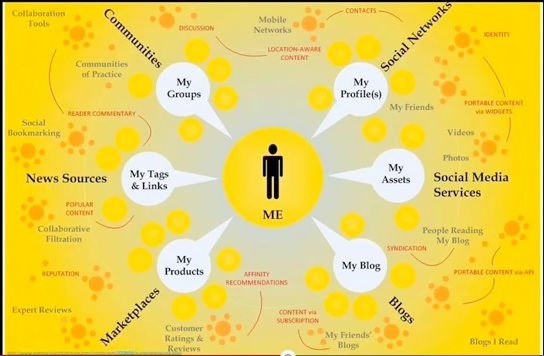
Rheingold’s vision of a person’s personal trust network copied from the video.

Teaching children to evaluate resources and determine credibility is the biggest challenge of our 21st Century world. Until now authoritative textbooks have dominated the world of education, but not anymore.

In the video below, Howard Rheingold, the digital thinker, professor (Stanford and UC Berkeley), and personal learning network advocate, describes how parents and educators should help students develop the ability to ask questions when they discover digital information, thereby evaluating the quality or lack of it. Rheingold calls this “crap detection,” a term originally coined by Ernest Hemmingway.

We need to teach kids, Rheingold points out, “how to search and how to find” and how to be sure that what is found is of good quality. The long-range goal is for each individual to develop what Rheingold calls a “personal trust network.”

Continue reading “Help Students Evaluate Digital Sources-Howard Rheingold Video”

Posted in 21st Century Learning, acceptable use, conversations on commenting, digital citizenship, electronic communication, interesting research, parents and technology, social media, social networking, teaching digital kids

Online Etiquette Not the Greatest

 Check out the May 13, 2012 post, Online Etiquette Lacking, Study Finds, over at the  Techlicious blog

Writer Christina DesMarais describes a study that identifies irritating digital world behaviors such as communicating at inappropriate times, sharing too much information, and highly negative commenting — all related to our increasing use of 21st Century social media.

This article is filled with digital world conversation starters that parents and teachers can use to begin discussions about ethics, privacy, and security.

Also, you can check out my related post, Conversations About Commenting.

Posted in digital footprints, digital parenting, marketing to kids, media literacy, parents and technology, privacy, teaching digital kids

Can We Stop Confusing Kids’ Privacy with Transparency?

Our digital society hasn’t figured out what to do about privacy. More importantly, it hasn’t figured what to do about the privacy of our kids — we keep confusing privacy with transparency.

It’s problematic enough that adults are diving willy-nilly into the digital world, sharing everything about themselves, private and not so private, but it’s even worse to observe a world where everything a child does and almost every mistake he or she makes is now public. These days we are giving children and adolescents no cover and no protection as they blithely explore the digital world while making what in any other era would be common and developmentally appropriate errors.

Lest I sound like a digital Luddite, I’m not. I love participating in the activities of my digital world, actively but moderately, and I have an arsenal of digital gadgets in my purse, book bag, and lying around my house. As an educator, however, I am keenly aware of how much we are forgetting to nurture and honor kids’ developmental stages as they grow up in this digitally dense world. Part of solving that problem involves ensuring that children have a guaranteed amount of privacy.

Continue reading “Can We Stop Confusing Kids’ Privacy with Transparency?”