
The Seattle Times recently published Ways for Parents to Ease the Tussle With Teens over Tech Use. The January 27, 2012 article, by Julie Weed, reviews the challenges of digital parenting and suggests five digital life ground rules, including setting up a technology/gadget evening curfew.
Category: family conversations
Media Literacy in Bhutan
Question: What’s the last nation in the world to have television reception?
Answer: Bhutan, which used to be an absolute monarchy and is now building democratic institutions as a constitutional monarchy.

What a great bit of digital world trivia to begin a family media literacy conversation!
According to this press story from Ithaca College, the Kingdom of Bhutan invited representatives from the school’s media literacy initiative, Project Look Sharp, to work with the Ministry of Education and help train the country’s teachers to understand and use media literacy principles.
As Bhutan develops democratic institutions, encouraging citizens to assume the responsibilities of civic participation, the country’s leaders want to ensure that the strengths of traditional Buddhist life are not overwhelmed by the exposure to western media influences.
Twitter Stats for the State of the Union
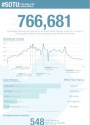 Politico, a Washington weekly newspaper that meticulously covers all things political, published this nifty Twitter graphic illustrating the tweeting environment during 2012 State of the Union (SOTU) speech. The data collection begins around 9:05 and continues until 10:40 eastern time. President Obama entered the chamber around 9:05 and the Republican response ended around 10:40.
The infographic includes a huge amount of data, illustrating the times (and issues), when the frequency of #SOTU tweets went up, and other hashtag (#) topics that people included in their tweets.
Twitter’s infographic illustrates an enormous amount of social networking activity. Use it as a classroom or dinner table conversation topic. providing a glimpse into real-time civics and history.
Safe Passwords: A Reminder for Parents, Kids, and Teachers
 A recent New York Times article, Young, in Love, and Sharing Everything, Including a Password, reminds parents and teachers to take time to talk to adolescents about password privacy. Pulitzer Prize-winning journalist, Matt Richtel, reports that kids share passwords — just as they share gifts and secrets — as tokens of trust and affection. But often an adolescent relationship doesn’t last and neither does the trust. What happens afterward can lead to hurt and humiliation.
Don’t wait until pre-adolescent years to start talking about digital topics such as password privacy. Family conversations, at home and at school, can begin as soon as children receive their first passwords, and over time these talks help kids develop a sense of personal privacy. Discussions can be brief and range over lots of digital topics, but they should occur regularly.
Many adults will be pleasantly surprised that children want to talk about these issues. My post, The Digital Citizenship Minute at the Teaching Tolerance blog, highlights some of the topics fifth graders want adults to address.
SOPA Best Coverage: We Need to Learn More Since It Will Be Back
 So maybe, other than discovering that Wikipedia wasn’t working very well, you did not really get into all of the brouhaha about SOPA.
Fine, but if you read blogs or write for blogs or just do a lot on the web, you need to learn a lot about this issue. Below is a basic reading list, culled reliable press sources, to help you understand more.
What stands out in many of the articles, is how many of our representatives in Congress do not know or even understand enough about the digital world to be making policy about it. I wonder how many representatives and senators based a decision on a single staff memo or an index card with important (but perhaps poorly explained) bullet points? Right now the bill is not going anywhere, but this issue will come back.
Educate yourself by reading some of the articles below. Continue reading “SOPA Best Coverage: We Need to Learn More Since It Will Be Back”
Screen Free Week — for Schools, Churches, and Families

Every year the Campaign for a Commercial-Free Childhood sponsors Screen Free Week.
The April 30-May 6, 2012 week-long activity, which for years was a turn-off-the-TV event, aims to encourage children and their families (and yes, adults with their digital devices), to be less dependent on activities in front of screens, encouraging all of us to consider other types of activities such as reading, playing outside, board games and exercise.
The point of Screen-Free Week is not to forget about digital activities, stop doing homework, and ignore the work that needs to be accomplished each day. Rather it’s a time to think carefully about the digital screen logjam in our lives and consider just how much time we are spending in front of TV, computers, iPods, iPhones, Blackberries, and other gadgets — and whether some of that time is better used for other things.
Just about everyone needs to come up with strategies to balance screen time activities with the rest of our lives, perhaps adding a bit more variation and creativity to our daily endeavors. But the week can also be a time to think about the quality of life. We should be asking ourselves, “How can we use our devices to learn and collaborate more, and are there ways they might help us grown into more productive citizens?”
The organization’s website describes the week as a celebration. Continue reading “Screen Free Week — for Schools, Churches, and Families”
Pew Report on Teen Behavior and Social Media Sites
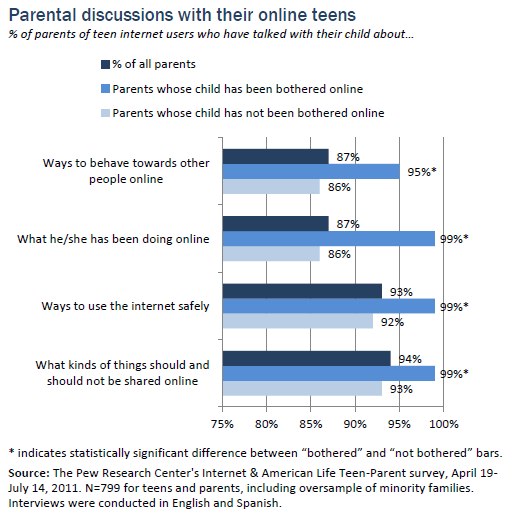
Take a few minutes to read at least the main points of the November 2011 report on teens and social networking, published in November 2011 by the Pew Internet and American Life Project. The executive summary is a fairly quick read.
During the spring and summer of 2011 researchers made calls to 799 teens between the ages of 12 and 17, and they also spoke with a parent or guardian of each adolescent. Interestingly, a large number of the teens surveyed reported that their parents and teachers provided them with the best and most helpful advice on digital citizenship issues and other virtual concerns. The media were the third most significant influence.
Browse all of the infographics from this Pew Internet report.
A Few Other Interesting Points
Continue reading “Pew Report on Teen Behavior and Social Media Sites”
 Media! Tech! Parenting!
You must be logged in to post a comment.