Posted in 21st Century Learning, digital learning, digital parenting, evaluating web site resources, family conversations, online research, parents and technology, teaching digital kids

Help Students Evaluate Digital Sources-Howard Rheingold Video

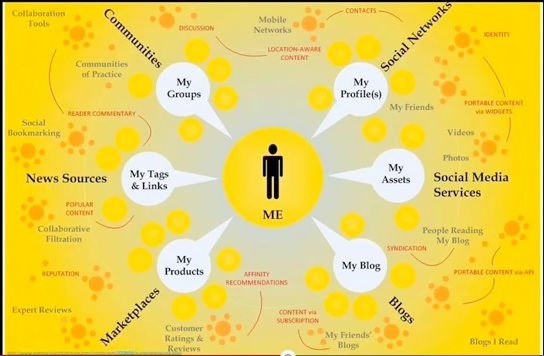
Rheingold’s vision of a person’s personal trust network copied from the video.

Teaching children to evaluate resources and determine credibility is the biggest challenge of our 21st Century world. Until now authoritative textbooks have dominated the world of education, but not anymore.

In the video below, Howard Rheingold, the digital thinker, professor (Stanford and UC Berkeley), and personal learning network advocate, describes how parents and educators should help students develop the ability to ask questions when they discover digital information, thereby evaluating the quality or lack of it. Rheingold calls this “crap detection,” a term originally coined by Ernest Hemmingway.

We need to teach kids, Rheingold points out, “how to search and how to find” and how to be sure that what is found is of good quality. The long-range goal is for each individual to develop what Rheingold calls a “personal trust network.”

Continue reading “Help Students Evaluate Digital Sources-Howard Rheingold Video”

Posted in cell phones, digital devices and gadgets, family conversations, online communication, parents and technology, setting technology limits

Some Time Out From Digital Devices?

In Google’s Eric Schmidt and the Curse of Constant Connection, Washington Post columnist Ruth Marcus reports on the Google executive’s commencement address at Boston University (BU). In her May 22, 2012 column Marcus describe how Schmidt made the case for a bit of balance — urging new graduates (even as they stayed connected during the graduation ceremony) to take an hour or so each day away from the digital devices that keep us so connected.

The full text of Schmidt’s speech is on the BU website, and it’s a good read for digital age parents who are seeking ways to schedule a bit more disconnected time with family and friends.

To learn more about the search for digital device moderation I recommend the book Hamlet’s Blackberry: A Practical Philosophy for Building a Good Life in the Digital Age. Author William Powers explores how people who lead connected lives (he does) need to find the time for reflection and interaction away from screens. And he describes how his family wants about setting some time to be together and disconnected.

Best Quote from Powers’ Book

If we’ve learned anything in the last decade about technology and human interaction, it’s that as screen time rises, direct human-to-human interaction falls off proportionally.

Posted in digital citizenship, digital parenting, family conversations, parents and technology

To Give Kids E-mail or Not — A Decision in Summer 2012?

Check out my post, Are You Thinking About Giving Younger Kids E-mail this Summer, a piece that I wrote about a year ago.

Summer is the time when many digital children start using e-mail accounts  — and often the laid back summer lifestyle means that parents spend less time helping their children develop strong and collaborative digital habits.

Last year’s post offers parents some ideas and suggestions for getting started and setting limits.

Hundreds of digital options — e-mail is only one of them — are available and waiting for your child to discover them, so in the final analysis you cannot prevent digital access. You can, however, make decisions help you focus on educating your child about digital citizenship.

Posted in cell phones, communicating with grandparents, family conversations, gadget ownership, online communication

Grandma’s iPhone

Over Easter weekend we’ll help my parents learn how to use Skype.

When it comes to her iPhone, few learning difficulties have popped up for my mom, age 84. I am delighted at the ease with which she has transferred from her old flip phone to this one — a 3G that I retired when I updated my iPhone.

How Mom is Using her iPhone

  • Her first lesson focused on typing in her contacts, and she caught on right away and also understands how to make a call using the contacts app.
  • The visual cues on the iPhone screen are terrific.
  • She loves being able to sit in a comfortable chair and play solitaire — no lessons required for this!
  • She enjoys using the speaker feature rather than holding the phone up to her ear.
  • She likes to use Safari anytime and anywhere when she wants to look something up, though like me, she is sometimes frustrated when the phone is slower because there is no wi-fi.
  • She is starting to use the map app.

Continue reading “Grandma’s iPhone”

Posted in 21st Century Learning, commenting, conversations on commenting, cyber-bullying, digital citizenship, digital parenting, family conversations, parent education, parents and technology

Removing Racist and Hateful Comments: A Simple Relevancy Test

Click to hear Tyler’s dad reading a statement after the jury returned its verdict.

After the jury announced its verdict in New Jersey I watched Associated Press video statement read by Tyler Clementi’s father. Sad and clearly with a heavy heart, he nevertheless looked to the future in a way that most of us could not have done had we lost a child the way he lost Tyler. Then I glanced down at the YouTube comments — just about every one included a gay slur or offensive language, and I was disgusted. The comments were not relevant.

Racist and hateful online comments demean writers, video-makers, and people who thoughtfully share digital content. It’s becoming tiresome. Masquerading as run-of-the-mill responses at the end of articles and videos – they are actually cyber-bullies’ remarks left here and there with the goal of offending and hurting others. The time has long past for comment and blog editors everywhere  — but especially at Google’s YouTube — to set up and enforce guidelines.

I know that the United States Constitution guarantees freedom of speech; however, it’s not freedom of speech we are observing but the freedom to run off at the mouth and bully others in ways that are not relevant to the content. As a result we are teaching all sorts of silent lessons — the kind we don’t really intend to teach to young people as they grow up.

Continue reading “Removing Racist and Hateful Comments: A Simple Relevancy Test”

Posted in answers to media questions, digital citizenship, digital parenting, family conversations, media literacy, parent child conversations, parents and technology, teaching digital kids

Campaign Advertising — Media at Its Worst for Kids

The tenor of the political advertising in this election season is appalling, and it will get worse. Because no code of best practices exists when it comes to campaign advertising, the current presidential election cycle media will feature unending ads that stretch the truth or make up the facts outright and deliver them straight into the lives of kids. While it’s a fine opportunity to help citizens, young and old, strengthen their media literacy skills, television is over-exposing all of us to some unfortunate and distressing content.

Click to visit.

To Learn a lot more, listen to a recently broadcast Diane Rehm Show about the non-candidate SuperPACs that are spending enormous sums on political advertisements. Jane Mayer’s recent New Yorker article, Attack Dog, is another comprehensive article. Talking to children about what they are seeing on television is critical, especially during an election cycle.

In a February 26, 2012 piece published at the USA Today Teachers’ Lounge (link no longer available), media lit guru, Frank Baker pithily describes the situation. He writes:

Continue reading “Campaign Advertising — Media at Its Worst for Kids”

Posted in digital parenting, family conversations, parent education, parents and technology, privacy

Think Before Taking Online Quizzes and Surveys

I have a big problem with online web surveys and quizzes aimed at kids. Many are tricky digital techniques using old-fashioned fun and emulating magazine quiz features of the past, but with a contemporary cyber-twist that encourages today’s web users — and many, many children — to happily divulge all sorts of personal information.

When you encounter a quiz or survey on a website, it’s a good time to chat with children about privacy and the methods that websites use to collect personal information. Remind them that no kid-friendly erasers are currently available to whisk things away once children provide information.

You may also want to visit the I Look Both Ways blog, where Linda Criddle has posted Online Quizzes and Surveys and the Real Risks These Represent. Linda’s post offers a comprehensive overview of the subject along with supplemental images.

Here’s a short excerpt — applicable for home and at school — from my November 2011 post at the Teaching Tolerance blog.

Continue reading “Think Before Taking Online Quizzes and Surveys”